Learn the key reasons to avoid buying fake perfumes and learn what risks you’re taking by choosing a perfume dupe over the original fragrance. Read before you buy!
All fragrance recommendations are based on my personal subjective opinions. I’m not an expert with comprehensive knowledge of all fragrances, so reviews on this site are influenced by forums, friends, and personal experience. I’m not affiliated with any stores or brands, so purchasing decisions are yours. Use the information at your own risk.
Navigation
ToggleStop Buying Perfume Dupes
Let’s be real. Your Instagram and TikTok feeds are flooded with dupes. Those sleek little ads for perfume dupes with the catchy music, showing side-by-side comparisons of a $300 bottle and its $30 dupe. The promise is obvious: smell good without spending money. In this economy buying a dupe feels less like a splurge and more like a life hack. Why wouldn’t you go for it?
I’ve been there. I’ve clicked “add to cart” on a bottle that swore it was a dead ringer for a fragrance I’d been lusting after for years. The excitement of that delivery was real. But so is the disappointment that followed. Because after years of being a fragrance nut, I’ve learned that with perfume dupes, you’re almost always paying for something, even if it’s not money. You’re paying with the experience itself.
Buying a dupe is a sensory, ethical, and even artistic compromise. And after you understand what you’re really missing, that $30 bargain starts to feel cheap. Here’s why I finally stopped buying dupes, and why you might want to think about it, too.
The Dupe Has No Soul
An original perfume starts as a daydream. It’s a perfumer getting obsessed with the smell of wet pavement after a summer storm, or the memory of their grandfather’s leather jacket. They’re like chefs, but for your sense of smell. They tinker, they fail, they have breakthroughs at 3 a.m., all to capture a feeling in a bottle.
Now, think about the dupe. Its origin story is a spreadsheet. A machine in a lab scans the original fragrance, spits out a list of chemical compounds, and a different chemist tries to approximate it with the cheapest possible ingredients that fit the list. There’s no passion.
It’s the difference between an author writing a novel and someone photocopying the summary off Wikipedia. You might get the basic plot, but you’ll never feel the prose, the character’s heartbreak, the tension in the dialogue. A dupe gives you the “what.” An original gives you the “why.” And in fragrance, the “why” is everything. It’s the soul of the scent, and you can’t reverse-engineer a soul.
Speaking of capturing the essence and soul of a fragrance, if you’re searching for the perfect gift this holiday season, look no further. I’ve put together a list of the 7 Best Men’s Colognes for Christmas Gifts in 2025. Check it out!
The Ingredients Ain't It

This is the most practical difference. Luxury houses will fly someone to Bulgaria to hand-pick roses at dawn because that specific field’s roses have a hint of honey no other field does. They’ll use real, aged sandalwood that costs more per ounce than gold. Even the synthetic ingredients they use are the highest quality. They’re the reason a great perfume changes on your skin over hours, telling a story from the bright opening to the deep, intimate dry-down.
Dupes? They run on a cost-cutting mission. To hit that $20 price point, they use the simplest, cheapest aroma chemicals available. These ingredients are often flat, harsh, and one-note. They don’t evolve. They just sit there, then vanish. That’s why your perfume dupe might smell kinda-sorta like the original for the first 15 minutes, then turns into a vague, slightly sweet, slightly chemical cloud before giving up entirely after an hour. It’s only built to smell similar from across the room.
An original is a home-cooked meal with fresh, market ingredients, layered spices, and love. A dupe is a frozen microwave dinner. It fills you up, but it’s not the same experience. Not even close.
Your Skin Deserves Better

This one is personal. Your skin is alive and it absorbs what you put on it. I learned this the hard way with a dupe that gave me a red, itchy rash on my neck.
Major brands test the living daylights out of their perfumes. They list allergens, follow safety standards, and generally try not to get sued for giving customers chemical burns. Their ingredients, while sometimes allergenic, are at least known quantities.
Dupe companies are fly-by-night operations selling primarily online. There’s no regulatory body checking their formulas. To make a vanilla note cheap, they might use a harsh chemical that’s a known irritant. To make it last, they might use a fixative that’s not skin-safe at high doses. You are the beta tester.
Furthermore, good perfumes are formulated to blend with your skin’s unique chemistry. Cheap, harsh synthetics often don’t. They can turn sour, smell like rubbing alcohol, or just die a sad, flat death. An original fragrance is designed for harmony while a dupe is only a crapshoot.
Ethics & Environment of Dupes
Okay, let’s step off the scent trail for a second and talk about conscience. That low price tag has to come from somewhere, and it’s usually from cutting corners you can’t see.
Big, established perfume brands aren’t saints, but they have reputations to protect. They’re more likely to follow ethical sourcing guidelines, support farming communities, and adhere to strict safety and environmental regulations. You can at least trace some of their efforts.
The dupe industry is the Wild West. Where do those cheap synthetic ingredients come from? What’s their environmental impact? How are the workers treated? You’ll almost never know. The supply chain is opaque by design. Plus, the whole business model is built on intellectual property theft. I mean they are just profiting off someone else’s creativity without any of the risk or investment. It’s some sort of cultural plagiarism.
In addition to that, dupes are the fast fashion of the fragrance world. The bottle is cheap plastic, the scent fades fast so you buy more, and when you’re bored of it, you toss it and get another. It’s a disposable cycle that feels gross.
When you buy an original, you’re voting for artistry, transparency, and a product meant to last. Using a perfume dupe is like endorsing a copycat product, fueling a downward spiral economy.
You're Missing Out on Real Joy
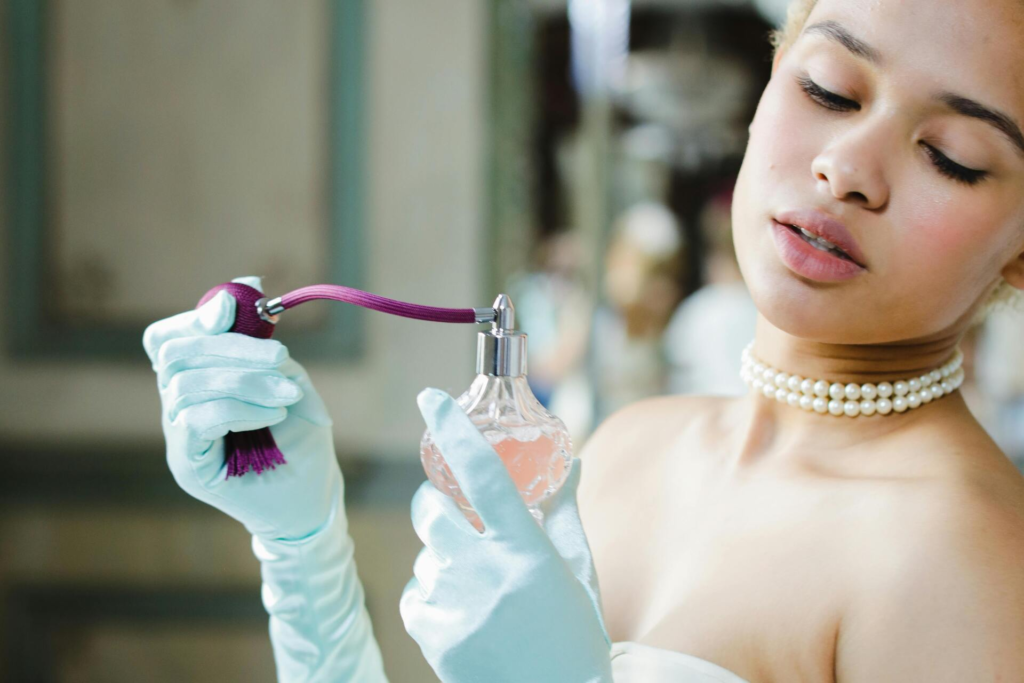
This might sound snobby, but stay with me. Perfume, when you truly love it, is a little piece of art you carry with you.
Think about the experience of the original, because the journey of finding the right perfume is really special. You spend an afternoon at a counter. Then, you spray strips and try scents on your skin. After that, you wait for the dry-down. Finally, there’s that lightning-bolt moment when you realize how beautiful it is. Maybe you saved up for it. Maybe it was a gift marking a big moment. It has a story, and you’re part of it.
The dupe experience is totally different. You click online, and soon a parcel arrives in a plastic mailer. The bottle is lightweight and generic. You spray it and feel nothing. It’s just a transaction made without any emotion. There’s no discovery or ceremony. Buying it is just settling for another product, like many others.
That connection is the magic. It’s why a certain scent can instantly transport you back to a person, a place, a feeling. A dupe is just a smell. An original can become a memory.
Dupes Aren't Even Cheaper
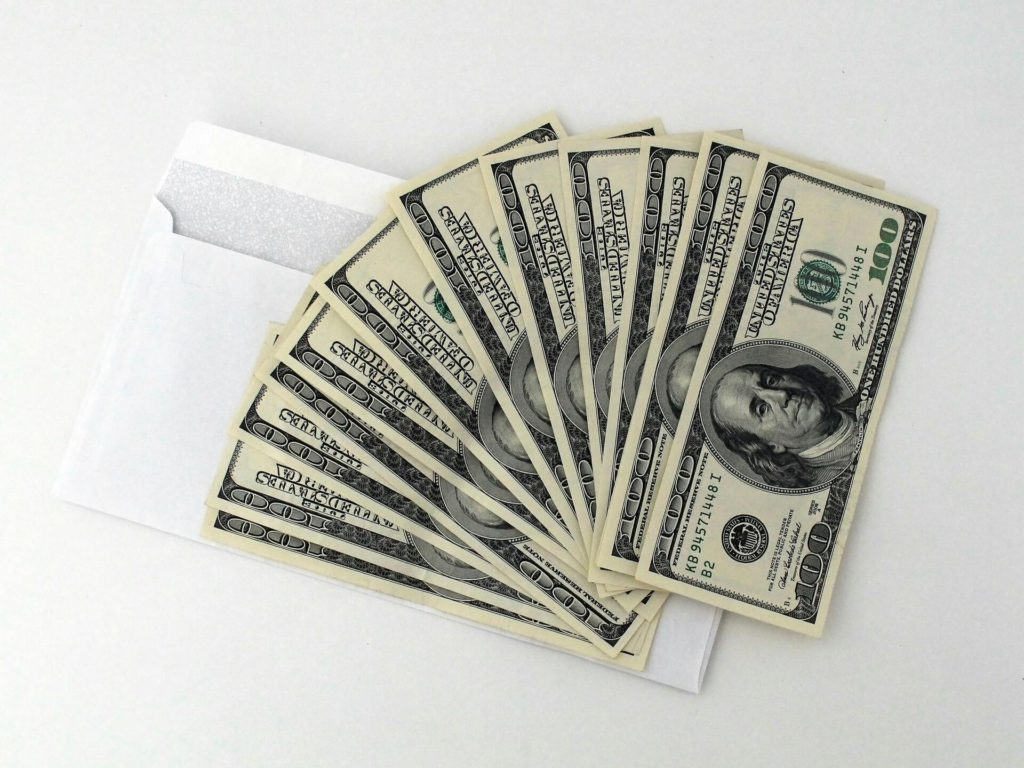
I know, I know. The upfront cost is brutal. $250 vs. $30 seems like a no-brainer. But let’s do the cost-per-wear.
A 100ml bottle of a quality original Eau de Parfum has about 1,000 sprays. At $250, that’s 25 cents per spray. Because it’s potent and long-lasting, you might use 2-3 sprays a day. That scent stays with you for 8+ hours.
Your 100ml dupe, even at $30, might only have 800 sprays of a weaker juice with less oil and more alcohol. That’s about 4 cents per spray. But because it fades, you’re spraying 6-8 times a day, reapplying at lunch. You go through the bottle in a quarter of the time. Suddenly, you’re buying four $30 dupes a year instead of one $250 original that lasts all year.
Financially, it’s closer than you think. But that’s not even the real cost. The real cost is having a drawer full of dupes you feel nothing for, instead of a small, beautiful collection of original fragrances that feel authentically you. Quality over quantity changes the game.
And finally, every time you buy an original, you’re encouraging the industry to create more beautiful fragrances or take more risks. Every perfume dupe purchase implies simply copying the popular scent, but doing it faster and cheaper. Which world do you want to live in? One where creativity is valued, or one where everything is a knockoff?
The Bottom Line
I’m not here to shame anyone. Budgets are real, and the allure of a deal is powerful. But perfume is one of those rare things where the genuine product offers something the copy fundamentally cannot: integrity, depth, and a heartbeat.
Next time you’re tempted, do this: go to a department store or a niche perfumery. Don’t buy anything. Just try an original on your skin. Live with it for a full day. Experience its journey. Then ask yourself if you’d trade that rich, evolving scent for a simple, fading dupe.
You might find that true luxury lies in the unforgettable experience inside the bottle. And that’s something no dupe can ever, ever replicate.
FAQ
Q: Are There Any Affordable Options that Aren’t Dupes?
A: Absolutely. The alternative to a dupe isn’t always a $300 luxury bottle. Speaking of great fragrances that don’t break the bank, check out my articles for men and women. Honestly, you might be surprised at how much bang for your buck you can get without emptying your wallet. Also try to explore smaller niche or indie brands that often price more accessibly by focusing on the juice over lavish marketing. You can also buy smaller decants or travel sprays of true luxury scents, allowing you to experience the original masterpiece without the full bottle investment. This way, you own a genuine piece of artistry, not a copy.
Q: If Someone Loves Their Dupe, Why Make Them Feel Bad?
A: That’s a fair and important question. The intention isn’t to shame anyone’s budget or joy. It’s about informed choice. Many people buy perfume dupes believing they’re getting an identical experience, just cheaper. This piece aims to reveal the tangible differences in quality, safety, and ethics, so that choice can be truly informed. If you’re buying a dupe thinking it’s the same, you might be missing out on what makes the original special without realizing it.